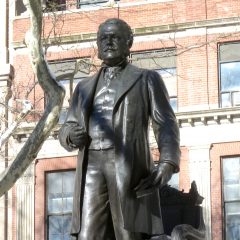

My first visit to Belgium was in 1977 to study at the College of Europe in Bruges. The College arranged a visit for all the students to the First World War cemeteries in nearby Ypres and Passendaele. We walked beside the graves of so many young men who had come from all over the world to die in Flanders. There were many Irish soldiers, from North and South, and many Scots. I remember being struck by the numbers of young Australians and Canadians and thinking that they had died far from home. We visited the German war graves as well as those of the allied forces. We were impressed by the stillness and beauty of the surroundings, in contrast with the horror of life and death in the muddy trenches. For students of European integration – French, Germans, British and all the other nationalities – our visit was a powerful lesson about the origin and purpose of European unity.
Over the years since then my work as a European diplomat took me to similar cemeteries around the world. I’ve attended Remembrance Day services in Tanzania, Uruguay, Bangladesh and Ghana. In 2013 I visited the cemetery outside Rangoon in Burma/Myanmar where my Uncle Jack’s name is carved on the wall listing the fallen in the Second World War. I wrote about Uncle Jack and my visit to Burma in ‘Voyages with my Grandfather’.
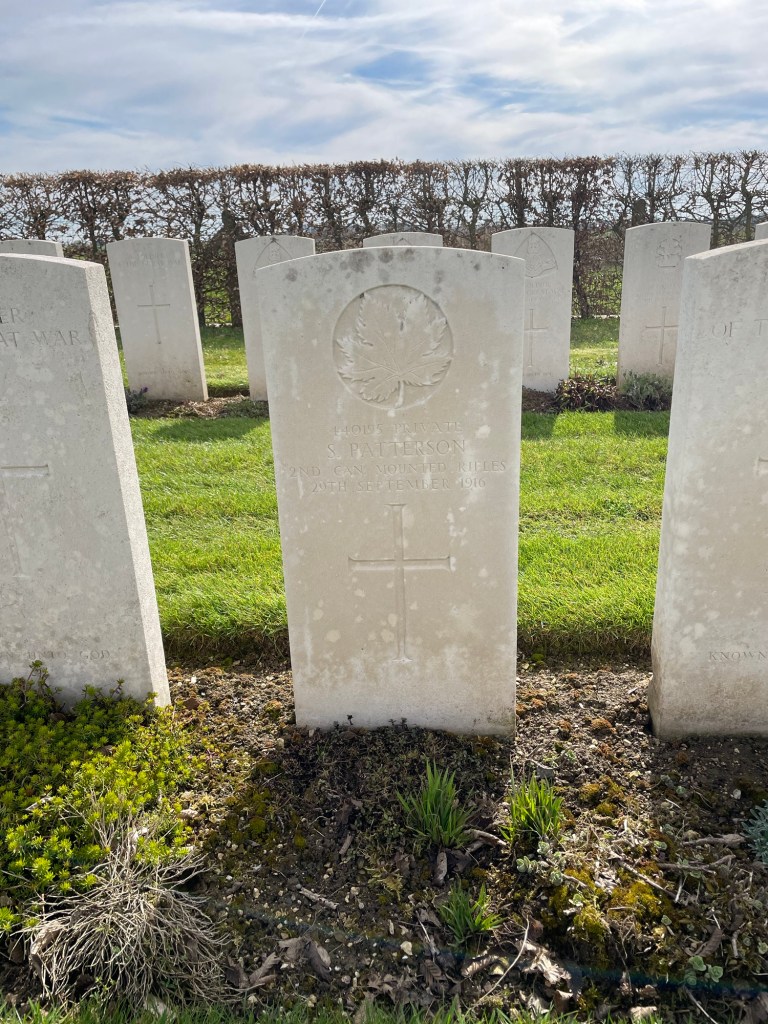
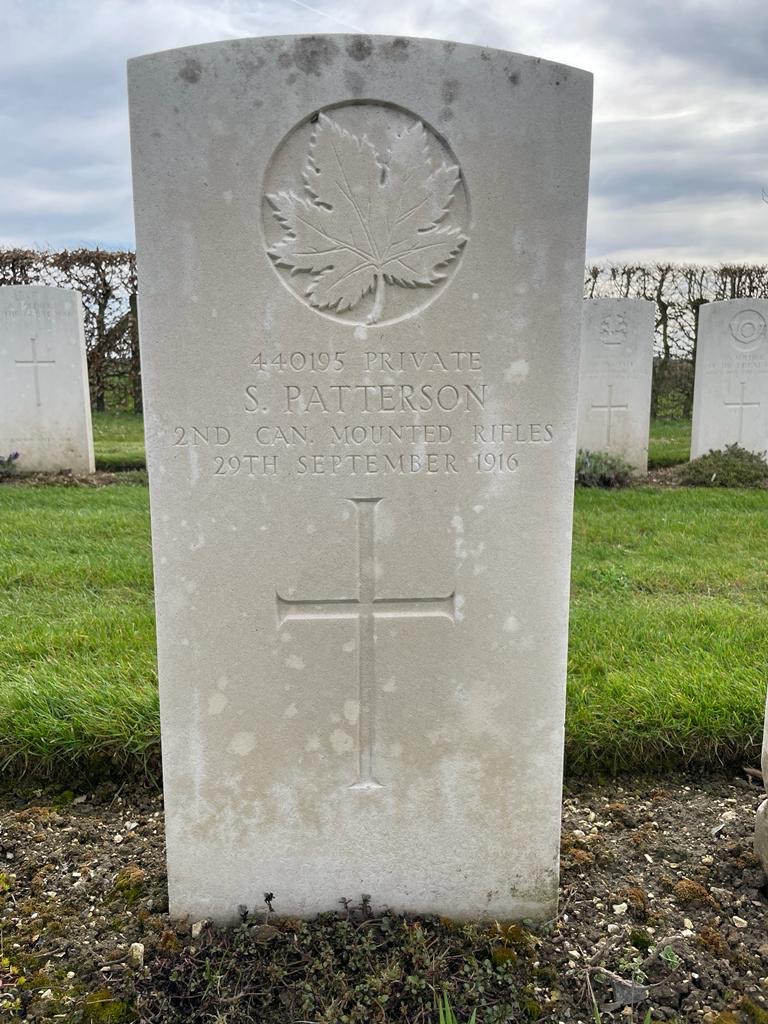
When I was researching for my second book, ‘The Corncrake’s Welcome’, I became aware that one of my father’s uncles had fought and died in the First World War. My second cousin James Patterson got in touch and was able to tell me where our great-uncle Samuel Patterson’s grave lies.
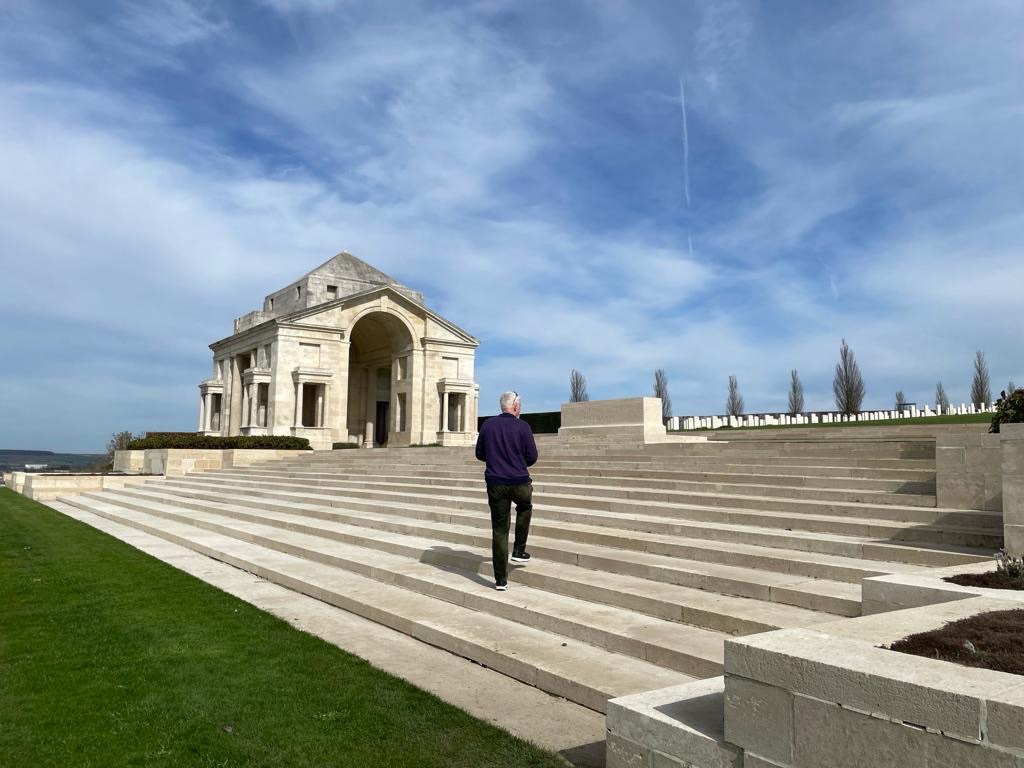
And so one of my final acts, before leaving Belgium at the end of this month, was to pay a visit to the First World War cemetery at Villers Bretonneux in Northern France. It took just two hours to travel from Brussels, passing Waterloo on the outskirts of the city, and then taking the autoroute into France as far as the valley of the Somme.
The cemetery lies a mile outside the village, on a ridge from where you can see for many miles in all directions. In April 1916 the German forces attacked the Allied lines and advanced some 70 kilometers. Beginning on 1 July 1916 the Allied Forces counter-attacked. On that day there were five thousand casualties in the Ulster Division alone, at Thiepval, further along the line. However Samuel Patterson was not one of those who went over the top with the Ulster Division. A few years before the War he and a brother had emigrated to Canada to make a new life for themselves. It was in Canada that he signed up to serve in the Imperial Forces who crossed the Atlantic to join the fight in Europe.
In the cemetery at Villers Bretonneux lie mainly Australian soldiers, but also some Canadians who were part of the Allied counter attack at the end of September 1916. I found Samuel’s grave stone in Row XVI A E5. Beside him, to his right and his left, are the graves of two soldiers ‘Known unto God’. Of course this is a euphemism: their bodies must have been so blown to pieces that it was not possible to identify them. At the entrance to the cemetery are carved the familiar words I saw in Rangoon ‘Their name liveth for Evermore’. More fine words perhaps, but at least the sacrifice of these young men is still faithfully recorded over a century after their death.

The day was bright and small birds were singing. Flowers adorned the graves which were carefully kept, as are the millions of other graves in similar resting-places all over the world. I shared the scene by phone with my cousin James in Scotland. I’m glad to have honoured my grandmother Jeannie Patterson’s brother. I don’t know if any family member has ever visited the grave before now.
In the Corncrake’s Welcome my father describes how the Patterson family was denounced from the pulpit of Kilraughts Reformed Presbyterian Church for allowing their sons to fight in the First World War, and how his grandfather, Samuel Patterson’s father, turned his back on that church as a consequence. How dreadful for a father to have lost a son in the War and then to be condemned and shamed because of it.
After the Second World War Europeans decided to create new institutions that would so bind them together that war between the countries would no longer be thinkable.There has been peace in Europe for most of my lifetime. However today Putin’s Russia has called this into question by fostering disunity in Europe and by attacking our Eastern flank in Ukraine. Our future and that of our children and grandchildren today depend on Ukrainian soldiers who are paying the ultimate price for freedom, and on our European determination to work together and do whatever it takes to support them.


 Closely Related to Chester