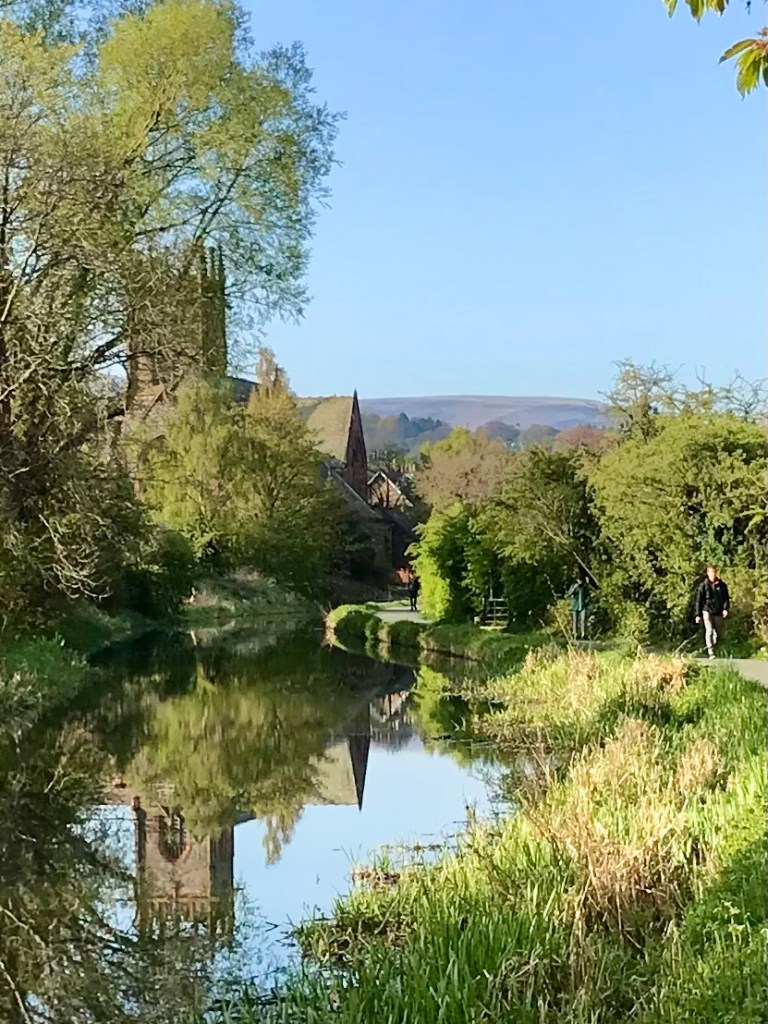
A few days ago I rose early to Ieave my car at a garage a couple of miles away beside the Union Canal. It was a beautiful blue-skied morning, such as Edinburgh occasionally bestows on its inhabitants, and I decided to run back home along the canal. The sun was shining brightly and the trees were just beginning to put on their new leaves. As I came to the stretch of the canal near the church at Polwarth I stopped and took a photo of the scene.
When I examined the photo later I was disappointed that the church tower was partly hidden by the leaves. Nevertheless I put the photo on Facebook where many people liked it. Looking more closely I could see that the tower is in fact fully visible in the reflection. You can see this even better if you turn the photo upside down.
My father might have crafted a sermon or a children’s address out of such a photograph. Perhaps his text would have been “for now we see through a glass darkly, but then face to face. Now I know in part; then I will know fully.”
A few days later, as I crossed the bridge over the canal, on my way to see a rugby match at Murrayfield, another beautiful sight greeted me.

There are also swans with their cygnets at the nearby Craiglockhart nature reserve. Each year the entire neighbourhood takes an interest in the birds’ nest and bets are placed on when the eggs will hatch. Ornithologists line up with their huge cameras to capture the moment of birth.
Yesterday afternoon I walked along the Union Canal, westwards this time to where it joins the Water of Leith, which winds its way down from the Pentland Hills.

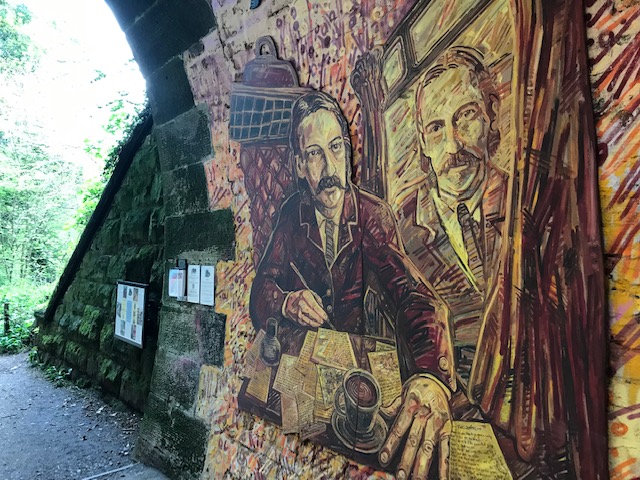
I followed the river up to the village of Colinton. This is territory Robert Louis Stevenson frequented as a boy. Stevenson, author of ‘Treasure Island’ and ‘Kidnapped’ was one of my grandparents’ favourite authors and I brought their copy of his book ‘Edinburgh’ with me when I first came to the University, many years ago. I remember reading it out loud to my future wife on the January night when we met.
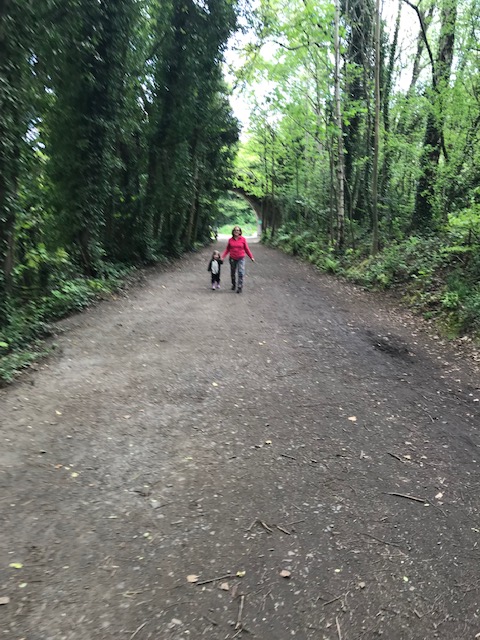
Today my son and his wife and daughters live in Colinton. Look who is coming along to meet Grandpa.
 Closely Related to Chester
You must be logged in to post a comment.