
In 1685, during the reign of Charles II, the covenanter William Hanna of Wigtown in south west Scotland was banished to Barbados for his refusal to acknowledge the King’s religious authority. Britain had established an important colony on the tiny Caribbean island, with sugar plantations, worked first by indentured labour and later by African slaves. It is not known whether my namesake made it safely across the Atlantic to captivity in Barbados. Many ships were wrecked on the voyage there and he may have drowned on the way.
Three centuries later Barbados, with a population of 250,000, had become an independent country, the proud ‘craftsman of its fate’ and a growing tourist destination. It was a model democracy, with a long established Parliament. It still exported sugar and rum, and produced some of the finest cricketers in the world. Tourists thought of it as paradise.
Barbados was also the location for the Delegation of the European Commission to the Eastern Caribbean. A strange set of circumstances decreed that Barbados would be my first Delegation, and that I should enjoy a more fortunate exile than my courageous Scottish forefather.
In 1986, and after five years in Brussels, first with the Irish Foreign Service and then with the European Commission, I was eager to go somewhere more adventurous. Brussels can be grey and dull. However the Commission had opened Delegations all over the world, including in many developing countries. Paola was born in Africa, and that is where I wanted to live and work.
A post came up in the Delegation in Cameroon for an Economic Adviser. As I did not have an economic background I had to do some serious studying. This meant learning how to calculate a financial rate of return, and an economic rate of return, and being able to explain the difference in an interview. I was given a paper on the appraisal of projects, taking the example of a tea estate in Burundi, and told to study over the summer.
In July that year we took the children to Club Med in Marbella, Spain. We had been given an upgrade after our original much cheaper holiday in Bulgaria was cancelled due to the Chernobyl nuclear disaster in Ukraine. Paola followed the latest craze, aerobics, by the swimming pool, accompanied by David aged 4. One evening the Basque terrorist group ETA issued a bomb threat and we had to evacuate the hotel and sit outside on the lawn until the wee hours of the morning while all the rooms were checked. The GOs entertained us with an exhibition tennis match and handed out cakes to the GMs and their sleepy children.
I spent much of each day on holiday reading about the prices of tea in East Africa and learning about shadow exchange rates. Today the Burundi case study is still on my shelf, faded by the sun and stained by spilt sun-cream. Back in Belgium I followed this up by reading Paul Samuelson’s classic economics text book, learning about the relationship between guns and butter, and a green-covered book about agricultural economics by Gittinger. When summer was over I had my interview, and it seemed to go well, but none of my teach-yourself economics impressed the Head of Unit for West Africa who chose someone else for the job in Cameroon.
I was disappointed, and over the winter became so desperate to leave Belgium that I volunteered for a post in Nigeria that had been vacant for a year. In the absence of any economist volunteers, or for that matter any volunteers at all for one of the toughest posts in the European Commission’s fledgling Foreign Service, I was quickly selected.
However, the day after accepting the job I was sifting through the telexes addressed to the Director-General when I came across an urgent request from our Delegate in Lagos for the supply of two armoured-cars. Now it is to be expected that when diplomats in faraway places make expensive requests they will lay it on a bit thick So perhaps our man in Nigeria was exaggerating, but, as I read his description of the frequent and grisly murderous attacks on expatriates as they travelled to and from the airport, I began to wonder if I had made the right choice. Was the European Commission condemning me, my wife and three young children to years of peril, just because I had taken the wrong course at university? When I approached my boss sheepishly with my second thoughts he did not seem surprised.
‘Why don’t you talk to someone who has been to Nigeria ?’ he said.
‘Call Eberhard Stahn. He had just been posted to Barbados, after four years in Nigeria’.
That afternoon, after locating the tiny dot of Barbados on a map, I phoned up the capital Bridgetown, and was greeted by a lady’s voice, with slow rich tones, in an accent that had a touch of West Country about it.
“Good morning, Bar-ba-dos Delegation, how may I help you?” This was Lana Swaby. I learnt later that she was the daughter of the first black West Indies Cricket Captain, Sir Frank Worrell. Lana put me on to the German Delegate, and I told him my story.
‘You don’t want to go to Lagos’, he bellowed. ‘It’s awful there. I have a job here. It has been vacant for six months. Come here.’
It sounded like a command, but I said it was unlikely that I would be given this job as a first one, as I was not an economist.
‘Rubbish’, he said. ‘I don’t need economists. We need someone who can write English. You should come here straight away.’
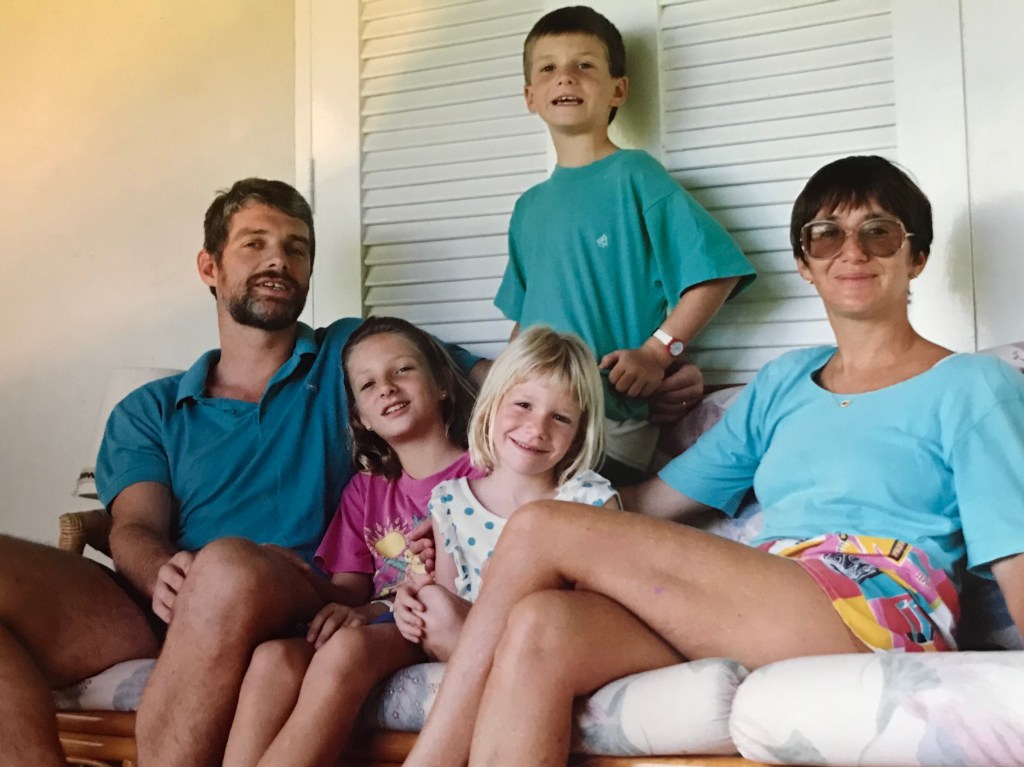
At first my bosses in Brussels were reluctant to consider such a cushy number for me. But they finally relented. Perhaps they realised the limited reputational risk of placing a non-economist in a tiny Caribbean island. And that is how, at the end of summer 1987 I gave a farewell drink on the 8th floor of the Berlaymont building, and was driven by my successor to Zaventem airport, where I met Paola and our three young children and we set off by British Airways on our way to spend four golden years of exile in Barbados.


 Closely Related to Chester
fascinating story… getting the job one wants at the Commission takes 1/ competence; 2/ luck. Exact proportions of which i am entirely unaware.
LikeLike